
Dress Watch

Small diameters, big comeback: why the elegant wrist is moving below 40 mm

Piccoli diametri, grande ritorno: perché il polso elegante torna sotto i 40 mm

Buying Guide

Small diameters, big comeback: why the elegant wrist is moving below 40 mm

LuxuryInStock Magazine · Reading time: 6 minutes · Category: Buying Guide

After years in which visual presence seemed to mean ever-larger cases, the market is looking at the wrist with different eyes. The biggest watch does not win: the watch that sits better, stays proportionate and supports personal style without overpowering it does.

New elegance does not need exaggeration

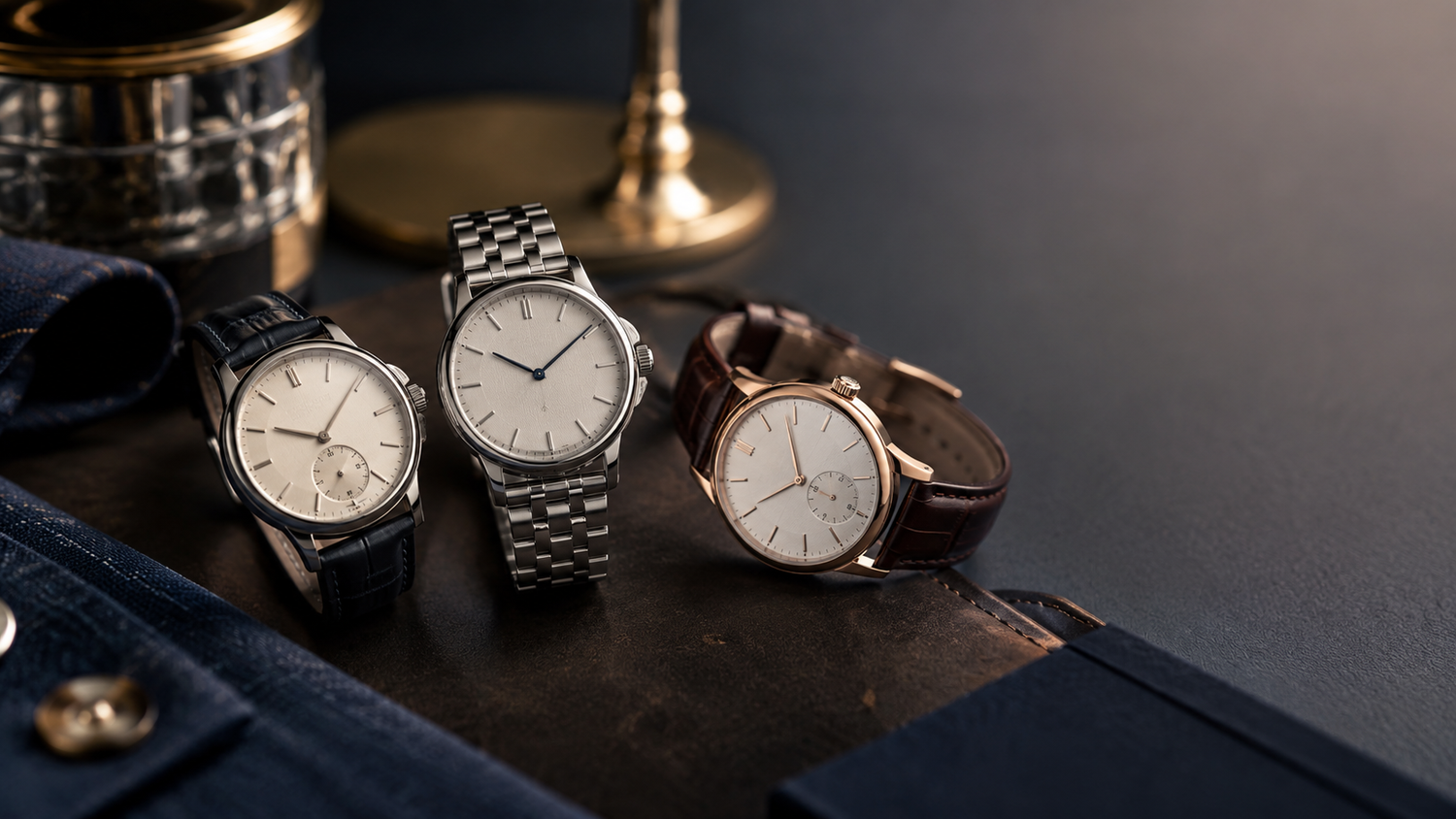
For a long time, diameter was used as a shortcut: bigger meant more modern, sportier, more noticeable. Today, however, the conversation is shifting. A 34, 36, 38 or 39 mm watch can feel more contemporary than a 42 mm piece when it works better with the wrist, the shirt cuff, the jacket and the real way the watch is worn.

This return is especially clear in dress watches, elegant timepieces and models with a unisex vocation. Recent conversations around collections, from the rational elegance of the Longines Master Collection to renewed interest in more compact chronographs such as the Tudor Black Bay Chrono 39, point in one direction: a size below 40 mm is no longer seen as small, but as refined, wearable and intelligent.

Diameter is not a competition. It is a proportion. And the right proportion is often worth more than two extra millimetres.

Why under 40 mm works so well

An elegant watch must do one thing first: wear well. It should slide under a cuff, not rotate on the wrist, not look disproportionate in photographs and not force the wearer to adapt their posture. Under 40 mm, especially between 36 and 39 mm, many models recover a natural balance: enough presence to be noticed, enough discretion to remain elegant.

The point is not to go backwards out of nostalgia. It is to understand that a watch is read together with the body, clothing and intended use. A technical diver can carry more volume. A sports chronograph can look for more energy. But a dress watch, a time-only piece, a complete calendar or an elegant everyday automatic often wins when the diameter remains contained and the case design is clean.

36 mm

An elegant, historical and very current size for slimmer wrists, vintage models and unisex watches.

38 mm

The most versatile zone: modern enough for men, refined for women and easy to wear every day.

39 mm

The perfect threshold for those who want presence without crossing the line of discreet elegance.

40 mm

It is not an absolute barrier, but it often marks the passage from an elegant watch to a sportier one.

Diameter, lug-to-lug and thickness: the three numbers that really matter

When choosing a watch, stopping at the diameter can be misleading. Two 39 mm watches can wear completely differently. The lug-to-lug distance matters, because it shows how far the watch extends across the wrist. Case thickness matters. The bezel shape, dial opening, curvature of the lugs and the type of bracelet or strap matter as well.

A 38 mm watch with a light dial and a thin bezel can look larger than a 40 mm watch with a prominent bezel. A 36 mm watch with an integrated bracelet can have more presence than the number suggests. A 39 mm chronograph can look more structured than a time-only 40 mm watch. This is why the right choice does not come from a rigid rule, but from reading the whole design.

Men, women, unisex: the boundary is becoming less useful

The return of small diameters also has an interesting effect: it makes the divide between men’s watches and women’s watches less rigid. Many 34, 36 or 38 mm references can work on very different wrists. A man can choose 36 mm for elegance and vintage culture; a woman can prefer 38 or 39 mm for presence and character. The right question is no longer whether it is for men or women, but whether it sits well, feels coherent and reflects the person wearing it.

For the pre-owned market, this matters. Elegant watches under 40 mm can become more transversal, easier to propose and more interesting for those looking for a considered purchase rather than one guided only by the fashion of the moment.

· · ·

How to choose a watch under 40 mm well

The simplest advice is to start from the wrist, not from the spec sheet. On slimmer wrists, 34-36 mm can be extremely elegant. On medium wrists, 36-39 mm often represents the best balance. On larger wrists, 39-40 mm can provide presence without losing refinement. But every rule must be checked against the case shape and the feeling on the wrist.

For online buyers, wrist shots, lug-to-lug measurements and thickness are essential. For those considering a pre-owned or NOS watch, original proportions, case condition and coherence between dial, bracelet and intended use become important as well. A well-preserved small diameter can be far more desirable than a larger watch that feels tired, over-polished or out of balance.

The LuxuryInStock reading

For LuxuryInStock, the return of smaller diameters is good news. It helps give value to elegant watches, NOS references, classic models and timepieces that only a few years ago may have seemed too small because the market had grown used to more aggressive volumes. Today those millimetres can be read correctly again: as balance, not limitation.

The best choice remains the same: buy the right watch for your wrist, your style and the way you live time. When proportion is right, a contained diameter does not remove presence. It concentrates it.

LuxuryInStock Selection

Looking for an elegant watch under 40 mm?

Discover the LuxuryInStock selection or request guidance to find the diameter, reference and style that best suit your wrist.

Discover dress watches

Reading next

Hamilton su LuxuryInStock: perché è il brand giusto per entrare nell’orologeria di qualità